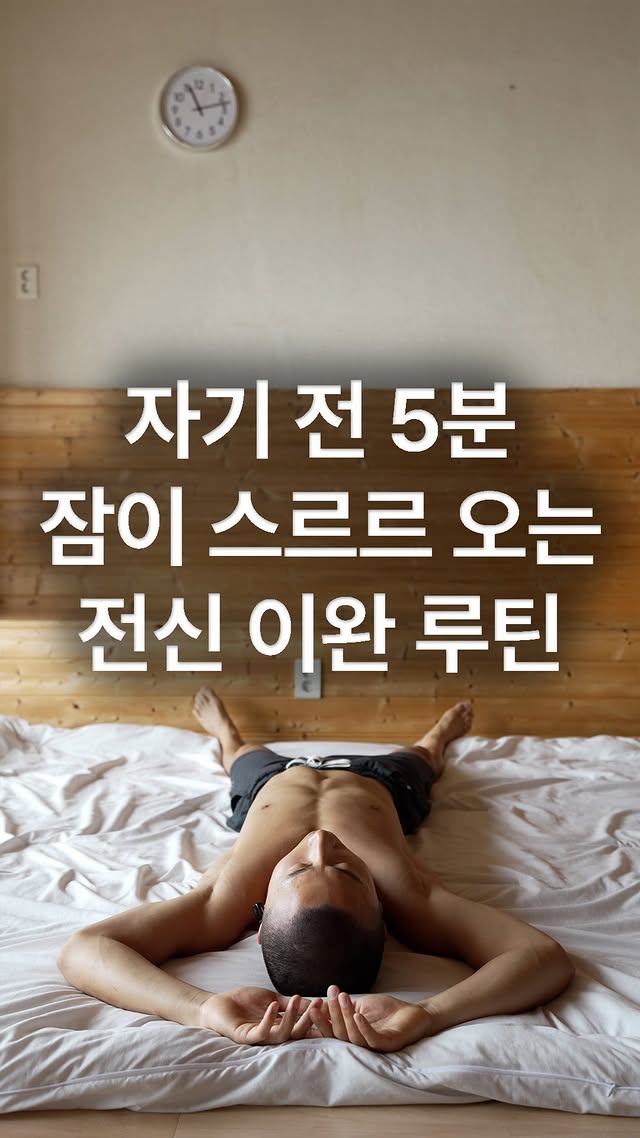
5-Minute Full-Body Relaxation Stretch Before Bed
A 5-minute full-body relaxation routine that gently releases tension throughout the body before sleep. It is suitable for calming the body and mind before bedtime by slowly moving the wrists and ankles, lower back, hips, hip joints, hamstrings, spine, shoulders, chest, and neck within a comfortable range.
- Category
- General
- Target areas
- Neck · Shoulder · Upper back · Lower back · Chest · Hip · Glutes · Hamstring · Quads · Wrist · Ankle
- Duration
- 1 min
- Difficulty
- Easy
Caution
- Do not force yourself to stretch all the way; move only within a comfortable range.
- Do not hold your breath; keep breathing slowly.
- Stop immediately if you feel any pain or discomfort.
- If you feel sleepy, you do not need to complete the entire routine.
Creator @5min_dailymove
Related stretches
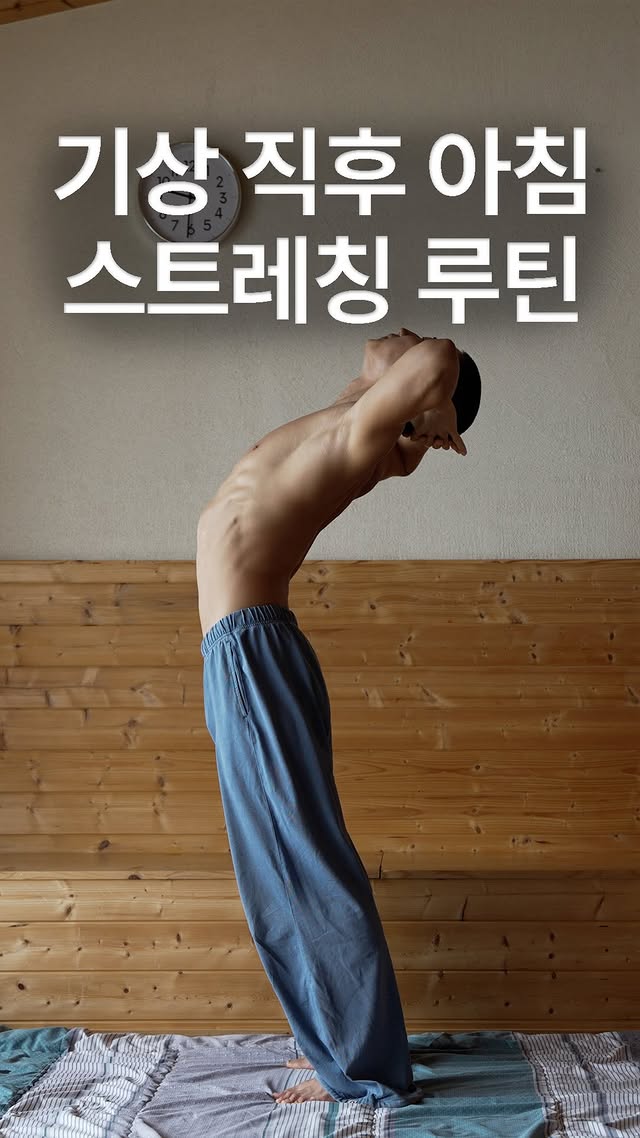
Full-Body Morning Stretch Right After Waking Up
A 5-minute full-body stretching routine that slowly wakes up a heavy body with your breath right after waking up. It gently opens the shoulders, spine, front of the body, hips, and lower body, making it suitable for improving your morning condition.
- Right after waking up, do not pull strongly; move slowly within your available range.
- If you feel pain, immediately reduce the intensity or stop the movement.
- Do not hold your breath; proceed in rhythm with comfortable inhales and exhales.
Creator @5min_dailymove
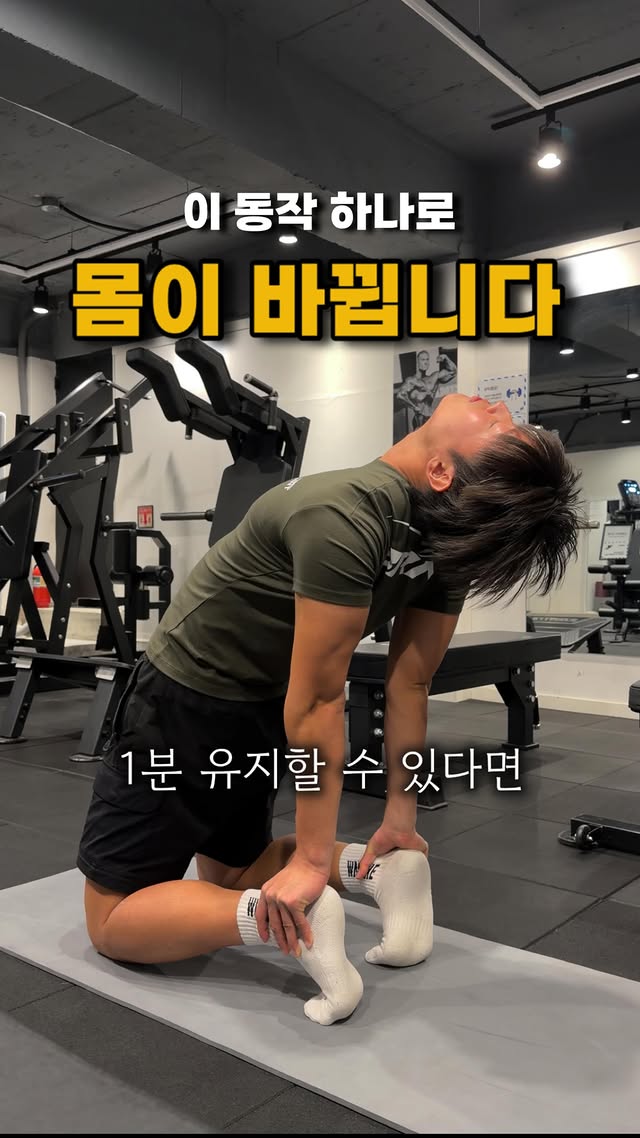
Camel Pose Front Body Stretch
A camel pose stretch that opens the chest and front of the hips, helping relieve rounded shoulders, forward-head stiffness, and front-body tension caused by prolonged sitting.
- Do not overarch your lower back or neck; focus on lifting your chest as you perform the stretch.
- Stop immediately if you have severe lower back pain or feel pressure in your neck.
- At first, support your hands on your lower back and maintain your breathing within a short range of motion.
Creator @uneedmuscle
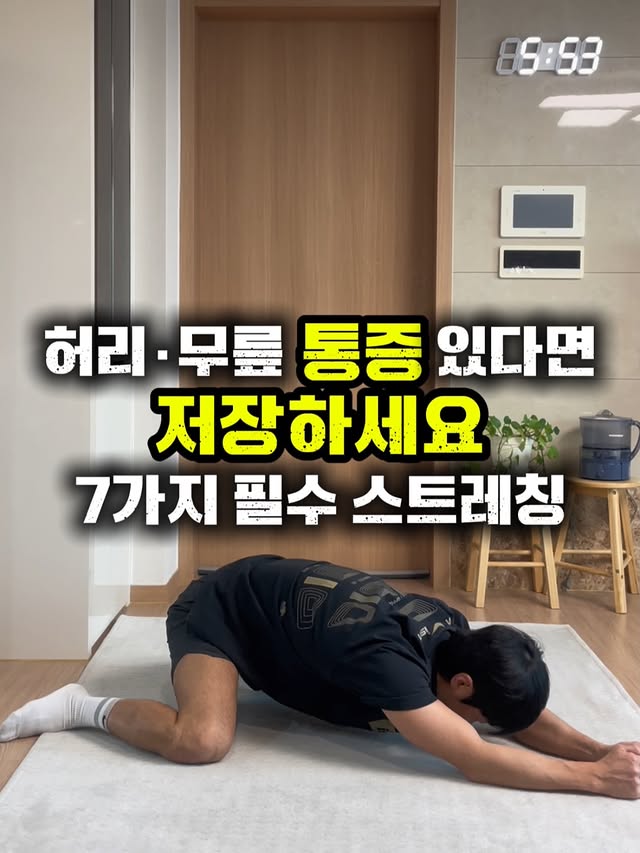
Essential Stretches to Ease Lower Back and Knee Strain
A full-body mobility routine that improves mobility in the hips, thoracic spine, glutes, front thighs, and ankles to help reduce strain on the lower back and knees.
- Stop immediately if the pain is sharp or gets worse.
- Do not force your knees or lower back to bend; stay within a comfortable range of motion.
- If you have a history of disc problems, joint injuries, or surgery, consult a professional before proceeding.
Creator @bodyedgelab